Payroll Software for Financial Services in Australia
Financial services firms in Australia operate within strict regulatory environments where payroll accuracy, reporting integrity, and internal control systems are critical. Payroll processing affects not only employee satisfaction but also compliance with ATO requirements, PAYG withholding, superannuation obligations, and broader governance frameworks.
Managing salaries, performance-based bonuses, adviser commissions, director remuneration, and Single Touch Payroll (STP) reporting requires payroll software designed for regulated professional environments – not generic payroll tools built for retail or hospitality.
Better Payroll provides payroll software tailored specifically for Australian financial services businesses, including Financial advisory firms, Wealth management practices, Accounting partnerships, Mortgage broking firms, and Financial consulting teams.
The platform centralises payroll processing, statutory reporting, superannuation tracking, and secure documentation into one structured payroll system aligned with Australian compliance standards.
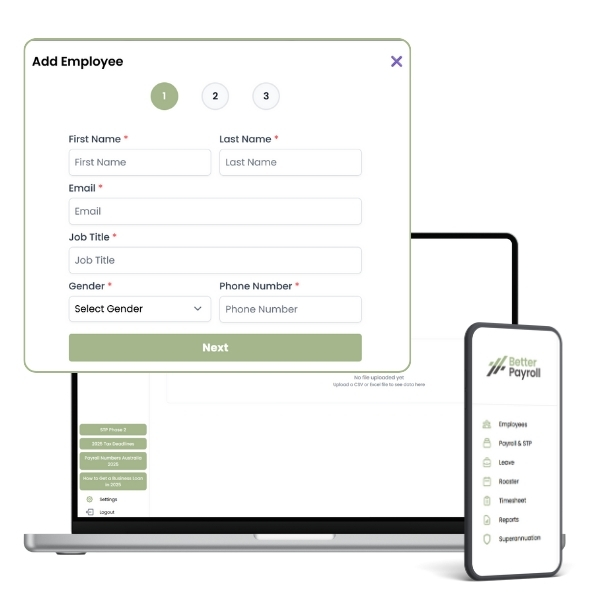
Set up quickly and manage payroll with confidence and control.
How Better Payroll Can Transform Payroll Operations in Financial Services
Financial services organisations rely on precision. Errors in salary payments, commission calculations, or STP reporting can create compliance exposure and reputational risk.
Better Payroll replaces manual spreadsheets and fragmented processes with a structured payroll framework that supports:
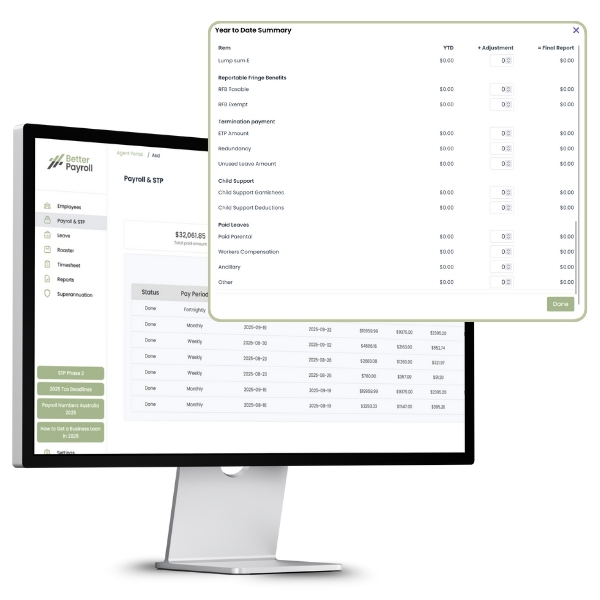
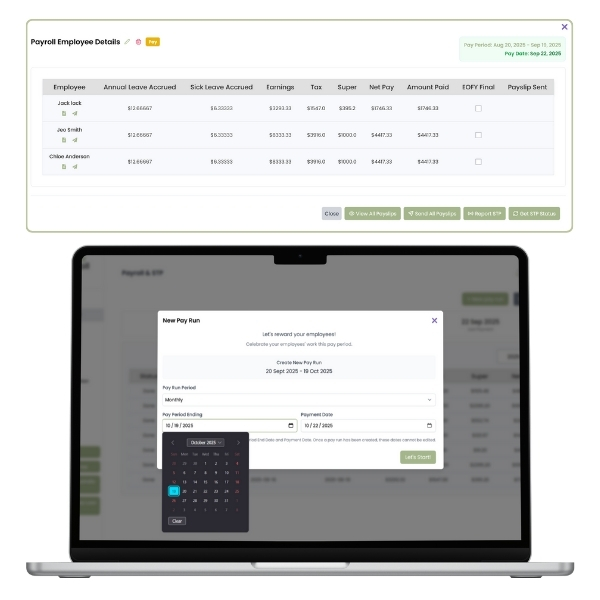
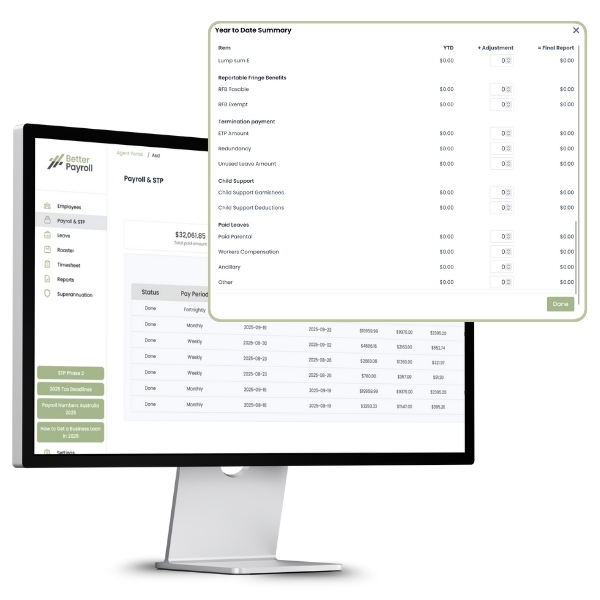
Reliable STP Phase 2 submissions to the ATO
Fixed salary structures for advisers and analysts
Director and partner remuneration
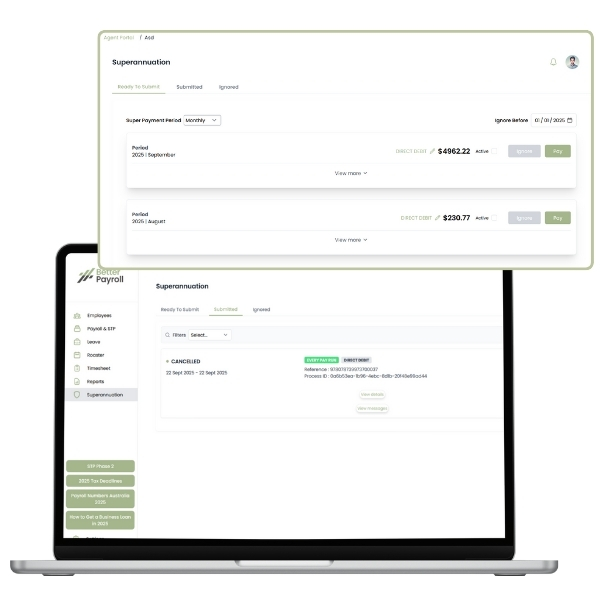
Automated PAYG and super calculations
Commission and performance-based compensation
Supporting award-based pay rates and overtime loadings
Reliable STP Phase 2 submissions to the ATO
Fixed salary structures for advisers and analysts
Director and partner remuneration
Automated PAYG and super calculations
Commission and performance-based compensation
Instead of reacting to payroll issues, firms gain proactive payroll control through automation, structured reporting, and audit-ready documentation.
By centralising payroll operations, financial services businesses strengthen internal governance while reducing administrative burden.
Industry Payroll Challenges in Financial Services
Payroll within financial services is shaped by regulatory complexity and professional standards.
Structured Compensation Models
Advisers, compliance officers, paraplanners, and administrative staff often operate under fixed salary agreements, while commissions or performance bonuses introduce variable payroll components.
Governance & Audit Requirements
Internal reviews and external audits require clear payroll documentation, accurate classification, and consistent record keeping.
Regulatory Compliance
Firms must meet ATO reporting obligations, STP Phase 2 requirements, PAYG withholding, and superannuation regulations every pay cycle.
Confidential Data Management
Compensation details must be securely handled to maintain professional confidentiality and trust.
Scalable Operational Risk
As firms expand, payroll complexity increases - particularly where multiple pay structures or bonus arrangements exist.
Better Payroll addresses these challenges through structured automation and secure payroll workflows aligned with regulated business environments.
Key Payroll Features for Financial Services Firms
Better Payroll includes payroll functionality mapped directly to compliance and governance needs:
Financial services organisations across Australia choose Better Payroll because it aligns with regulatory expectations and governance standards:
Designed for regulated professional environments
Secure handling of sensitive payroll data
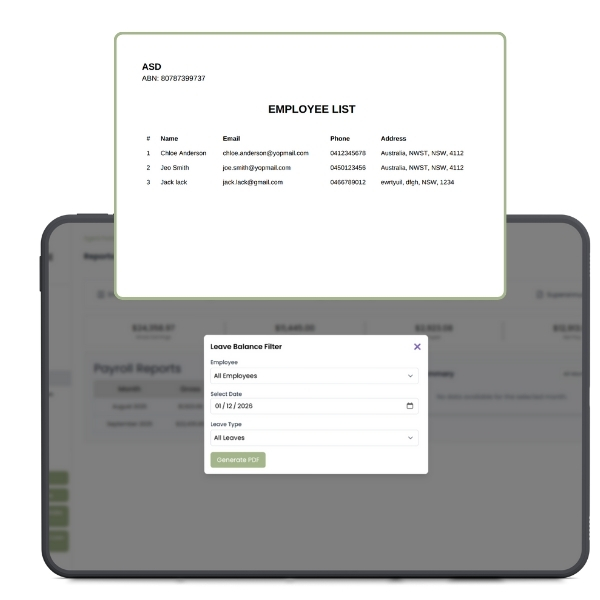
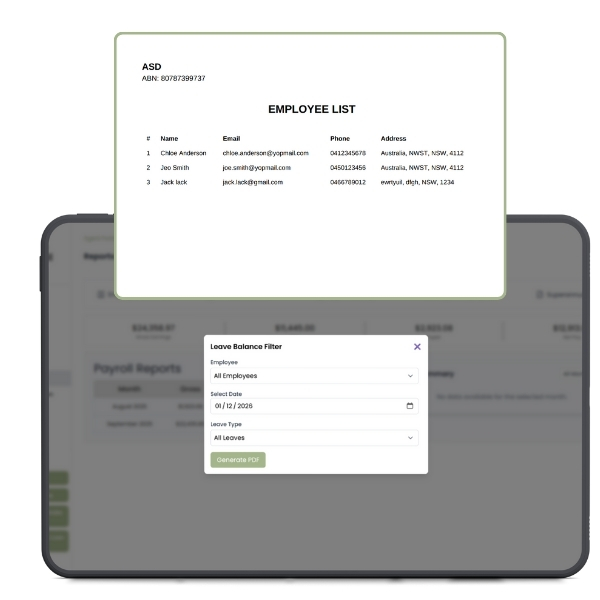
Structured payroll documentation for audit readiness
Automated compliance reporting for each pay cycle
Reduced manual payroll risk
Integration compatibility with Xero and MYOB
Better Payroll provides payroll reliability without introducing unnecessary operational complexity.
What Our Customers Are Saying
Payroll accuracy matters in our advisory firm. We manage salary and bonus structures, and everything needs to be compliant. Better Payroll gives us confidence each cycle.
NSW
Financial Adviser
We moved away from manual spreadsheets because of governance concerns. Now payroll reporting is structured and secure.
VIC
Compliance Manager
As our firm expanded, commission and salary processing became harder to manage manually. Automation has significantly reduced risk.
QLD
Director, Wealth Management Firm
FAQ about Payroll Software for Financial Services in Australia
Better Payroll offers a 30-day free trial so financial services firms can evaluate payroll functionality before subscribing. You may cancel before billing begins.